
.svg)
banner.png)

Teaching and Learning Projects


QEF Projects
CRIO: Virtual Teaching and Learning Platform for the Blended-learning New Normal
Overview
Online and blended learning are essential components in active learning in the 21st century. Beginning 2019, Hong Kong Shue Yan University has been working on the platform called CRIO supported in a 20 million project funded by QESS to develop such a platform for the self-financing university sector.
The system was put in use last year. While Hong Kong Shue Yan University has returned to normal teaching and learning schedule, Crio which is integrated by uReply, a web-based Student Response System (SRS) to use with mobile devices, can still be used to facilitate effectiveness and interaction in teaching. Since 2021, the system has been used in more than 27 undergraduate courses in Hong Kong Shue Yan University. In total, a number of 4119 activity sessions have been created during online, face-to-face or blended teaching on Crio and a number of 15,787 students’ responses were recorded. To evaluate the effectiveness of the system in supporting classroom interaction during different modes of teaching, Hong Kong Shue Yan University has conducted an evaluative survey. Around 40 teachers and 690 students were surveyed. Most of the teachers and students were satisfied with the experience of using the system and agreed that the system facilitated interaction during class.
Hong Kong is lacking an online teaching solution that is locally hosted, free from privacy issues, accessible in the Mainland and well-integrated with LMS as well as sophisticated interaction and examination functions. CRIO has many of the core functions of Zoom, and to address the afore-mentioned issues, CRIO is currently being enhanced with the locally hosted and protected server, accessibility, integration with LMS and interaction and examination functions.
The objective of this proposed project is to further strengthen the platform and launch it for use in the primary and secondary school sector.
The system was put in use last year. While Hong Kong Shue Yan University has returned to normal teaching and learning schedule, Crio which is integrated by uReply, a web-based Student Response System (SRS) to use with mobile devices, can still be used to facilitate effectiveness and interaction in teaching. Since 2021, the system has been used in more than 27 undergraduate courses in Hong Kong Shue Yan University. In total, a number of 4119 activity sessions have been created during online, face-to-face or blended teaching on Crio and a number of 15,787 students’ responses were recorded. To evaluate the effectiveness of the system in supporting classroom interaction during different modes of teaching, Hong Kong Shue Yan University has conducted an evaluative survey. Around 40 teachers and 690 students were surveyed. Most of the teachers and students were satisfied with the experience of using the system and agreed that the system facilitated interaction during class.
Hong Kong is lacking an online teaching solution that is locally hosted, free from privacy issues, accessible in the Mainland and well-integrated with LMS as well as sophisticated interaction and examination functions. CRIO has many of the core functions of Zoom, and to address the afore-mentioned issues, CRIO is currently being enhanced with the locally hosted and protected server, accessibility, integration with LMS and interaction and examination functions.
The objective of this proposed project is to further strengthen the platform and launch it for use in the primary and secondary school sector.
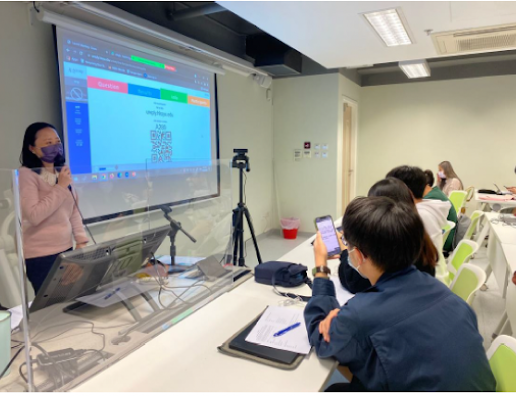
The use of Crio during a blended learning course in the Department of Chinese Language and Literature in HKSYU
Objective
- Enhancing instructor’s competencies in the technology know-how and the pedagogy in designing and delivering an online or blended-learning course,
- Providing training to all teaching staff and teaching relief to selected instructors in the aspects of technology and pedagogy in developing online/blended courses.
- Evaluating and disseminating best practices to other self-financing institutions.
To address the afore-mentioned issues, CRIO is further enhanced with the following characteristics:
- Secured privacy of data because of the local servers in Hong Kong
- Lower cost in the long run with more controllable pricing model
- Configuration of the servers to ensure accessibility in Mainland China
- Local support that leads to quick and detailed responses to all enquiries
- Customizable services are available to support integration or minor adjustments
- The integrated uReply engine facilitates far more effective and interactive online teaching
- CRIO combined the learning analytics of both the online conferencing and interactive teaching components for all-rounded understanding of students
- Different levels of report will be available. The school-level reports will assist the school in understanding overall usage by various teachers. The teacher-level reports enable teachers to understand the performance and engagement of individual students. The student-level report enables each student to better understand themselves by giving them a full record of their work side-by-side the whole class performance.
- The exam component that is built on top enables to use of it as an online examination tool with functions such as timed release of examination paper and proctoring over the internet
Screenshots
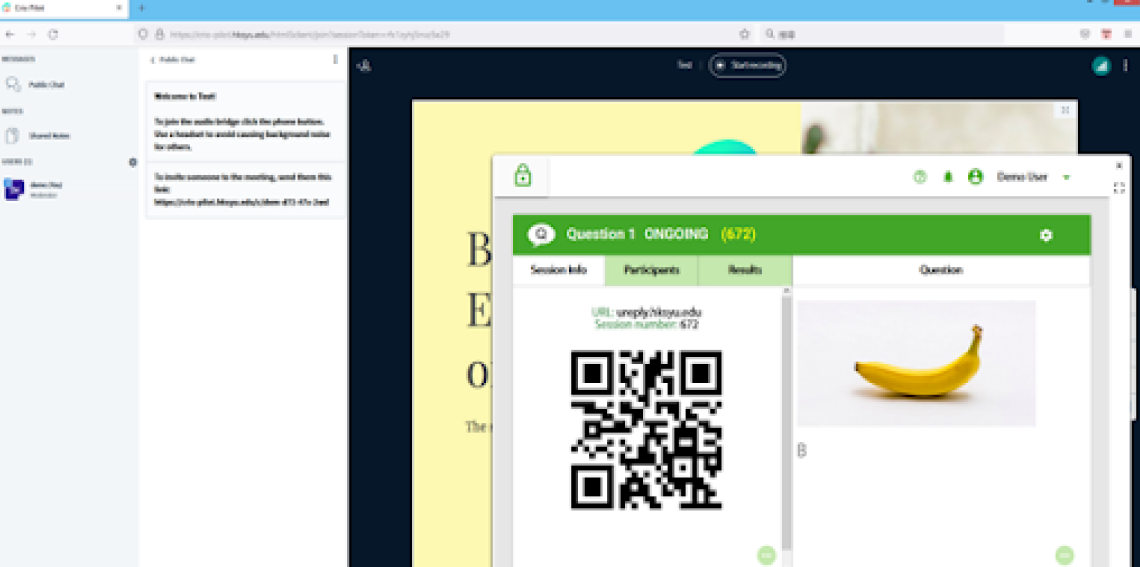
uReply interactions side-by-side online teaching
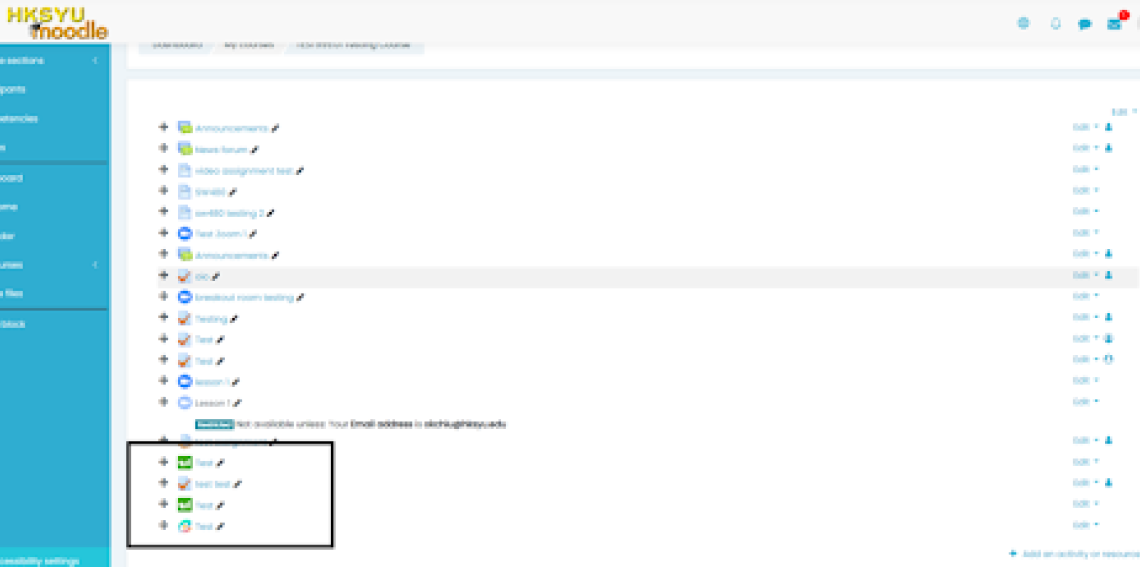
Integration of Crio into HKSYU’s moodle.
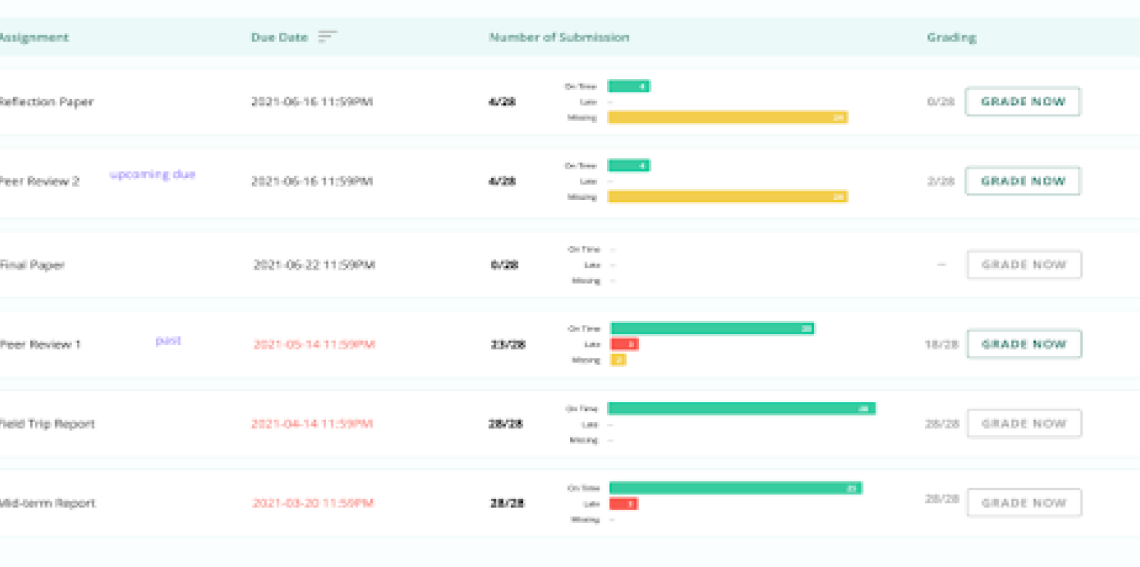
Teacher-level report for understanding individual students
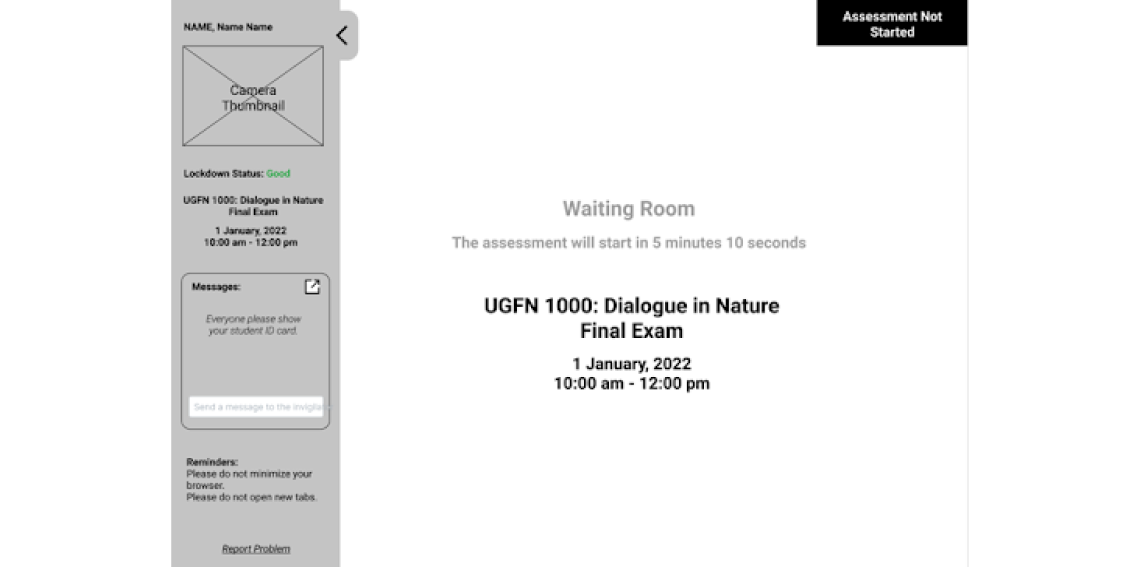
Exam component in CRIO
Funded Projects
Overview
This project aims to establish a Resource Centre for Digital Competence Education (RCDCE) as a centralized body in HKSYU. The RCDCE will be the headquarter to plan and oversee the organization, utilization, and creation of learning resources for digital competence education. It consists of one online platform (The Digital Competence Education Platform) and one offline resource hub (The Digital Competence Learning Commons)

The use of Crio during a blended learning course in the Department of Chinese Language and Literature in HKSYU
Objective
- Identify, centralize, and utilize learning resources for enhancing students’ digital competence.
- Develop eLearning modules of digital competence with reference to Digital Competence Framework for Citizens (DigComp) 2.2.
- Provide learning support activities to increase students’ digital learning opportunities and practices.
- Conduct research to evaluate the initiatives adopted for digital competence education.
- Share experiences from the establishment of RCDCE to advance digital competence education.
Screenshots
uReply interactions side-by-side online teaching
Integration of Crio into HKSYU’s moodle.
Teacher-level report for understanding individual students
Exam component in CRIO
↑